
Grip load has to go somewhere, and the wrist takes the hit.
Every swing, serve, and heavy lift transfers force through the hand and into the wrist. Golfers absorb that load at impact, especially on a mishit or a firm turf strike. Racquet sport players load the wrist on every serve and groundstroke. Lifters load it every time a bar or dumbbell is gripped under tension. Do that enough times without enough recovery, and the tendons crossing the wrist start to complain.
Most wrist pain we see falls into one of two categories: an acute strain from a single hard impact or heavy lift, or a slower-building tendinopathy from weeks or months of repetitive grip load. Telling those apart, and finding exactly which tendon is irritated, is the first step to fixing it instead of just resting it.
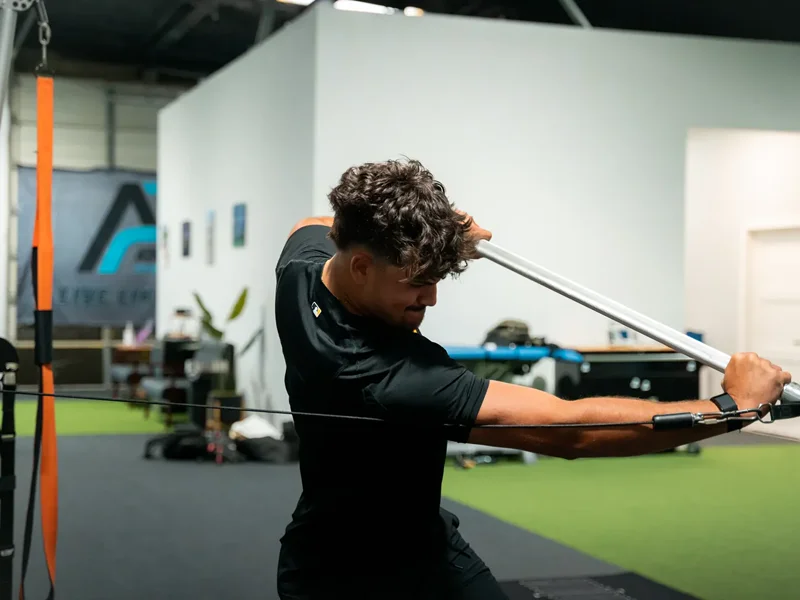
Signs your wrist pain needs more than rest.
Wrist pain that lingers past a few days, or keeps returning with grip-loaded activity, usually has an identifiable source rather than being something to just push through.
Wrist Pain With Grip
Pain that shows up specifically when gripping a club, racquet, or bar, and eases when the hand is relaxed.
Pain After a Mishit or Heavy Lift
A sudden strain following a hard impact, a mishit shot, or a heavy lift, rather than a gradual build-up.
Wrist Tendinopathy
A slower-building ache along the tendons crossing the wrist from weeks or months of repetitive grip load.
Weak Grip Strength
A noticeably weaker grip on the affected side, making it harder to hold a club, racquet, or bar with control.
Stiffness After Activity
Wrist stiffness that sets in after a round, a match, or a training session and eases slowly overnight.
Swelling Around the Wrist
Mild swelling or puffiness around the wrist joint following a particularly demanding session.
Calm the tendon. Then rebuild the grip.
Wrist injury treatment at Athlete Pro Sports Medicine starts with identifying whether you are dealing with an acute strain or a repetitive-load tendinopathy, since the two call for different starting points. Hands-on manual therapy addresses the wrist, forearm, and elbow together, since grip-loaded activities stress the whole forearm chain, not just the wrist joint itself.
From there we use IASTM to address the repetitive strain patterns that build up around an overloaded tendon, dry needling to release the forearm muscles that control grip, and a progressive strengthening program that rebuilds grip capacity before you return to full swing, serve, or lift.
No referral needed. Cash-pay: no visit limits, no prior authorizations, no insurance company deciding when you're done. In most cases, you can be seen within the same week.
What our patients say.
"Taylor is a wealth of knowledge about the body and movement. Top notch combining knowledge, human movement, and demands of sport. Highly recommend!"Zac A. · Athlete Pro Patient
Talk to a Specialist
No referral needed. Cash-pay, no insurance limits, no prior authorizations. Same-week appointments available.
Your first visit is a full, one-on-one evaluation: come in, tell us everything, and leave with a plan.
You’re all set.
We’ll reach out within one business day to confirm your appointment. If you need to speak with us sooner, call us directly.